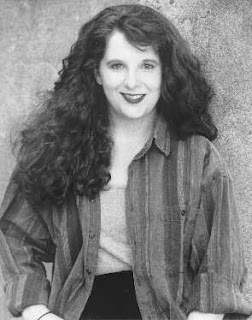
Tuesday, April 02, 2024

 April 2, 2024, & Poem #2

It is National Autism Awareness Day in National Autism Awareness Month; doesn’t that sound grand? As we say here, every day is autism awareness day and it is a fine day, indeed! I realized tonight that this awareness day was voted in by the United Nations Council the same year our son was diagnosed with ASD, 2007. I haven’t written specifically about it in a very long time, but I thought I’d try to funnel my awareness to the page tonight.

 Sorry, it is a long one as I have a lot to say about my favorite and most important Boy in this world (Man-Boy). I couldn’t get it to single space on the blog, so it looks longer than it is but I hope you read it to the end.


ASD Evidence for Evaluation

 You were what I didn’t expect

Even though I read the book on what to prepare for

You were bigger than you looked

When we peeked at those

blurry black and white

Pictures of you swimming serenely

Floating comfortably inside

Connected by a cord

Each inhale kept us both alive


Then out you popped

Like a loud champaign cork

They pulled you into the cold, bright, noise

and at first you didn’t cry

you opened those big eyes and took it all in

and visibly sighed

like a very wise old man thinking

“Is this all?”


I didn’t think that

Nor your father

As we starred at our miracle child

That didn’t cry

Wasn’t wild

From birth

Just looking and leaning in

To see what might happen

Saying not a word


You were late at everything

Walking, talking on your own, drawing, and pointing

You had to be poked and prodded for all of it

And yet you drifted to anything written

You were smitten with the alphabet

and words, words, words, words, words, words, words

that you could repeat or mimic

like a little bird on our shoulder

you cried to hold telephone books

and rattled the pages

gloried in what they said


One day, being only a little past one

You read to us

We thought you were

Simply repeating what you’d heard

We couldn’t resist testing our tiny mimic

We gave you a book

You had never seen

It sounds obscene

But you read it!

Every last syllable

You would think

This was our clue

About you


At two and a bit

We were suggested

To take you

And get you tested

No, we thought

We were fraught

With all, we’d heard

This dreaded word

Autism


You flew through all the tests

we thought this best

but they brought us back

to read the facts

it was what we dreaded

to pass those tests

meant it was embedded

somewhere deep in family history

or had to do with how late

you came to us

with disgust

they looked at us

or so it felt

like it was our fault

they called you marred

our family scarred

your future bleak

because you still

didn’t speak


The next six years

You hardly slept, spoke, or ate,

Still, we thought you were great

Bringing us so much joy

You giggled and grew

And you knew a slew

Of books you could

Repeat by heart

The spark of humanity strong

You plodded along

Exploring everything

Siphoning off our energy

And re-energizing

Our connection

To each other, family, and the world


It wasn’t a bed of roses

You’ve many times

Said how hard it is

To have this plaque

You wear and it wears you

Autism


It is this thing that people think they know

Until they try to get to know

You

The autism sauce is mixed in

As part of the dish

That is your unusual

Perspective, vocabulary, and deep insight

To the corner of the world

You care about the most


Your passion reaches

Farther than my mind and heart often

You cause us to explore

Where we wouldn’t, couldn’t, or hadn’t thought to

You cause me to care more

Of those I’d passed by

Without a thought

If it weren’t for the autism

You have that in common

With more people than you know


My joy boy

That can brew

Churning into a storm boy

Is Man-Boy rounding the adult corner

Where those things still live together

In a house less sensitive

Then when he was a child

Now milder compared to your wilder past

You’ve learned clues

For stretching moments of peace or hope

How to cope

The choppy waves

you brave autism's cold, bright, noise

Floating alone in the wide autistic sea

Where you can always exceed 

anyone's expectations


Monday, April 01, 2024

NaPoWriMo is National Poetry Writing Month or write a poem a day. I haven’t done it since 2019, but I used to participate every year. Grad school and then early teaching derailed that. I give myself a limit of writing poems in 10 to 20 minutes and then posting them. Some days they have lots of potential and some days not so much, but I post them all. Let me know if you are going to participate and I’ll read what you write too. The link to sign up to register your site with poetry here. 

 It was my students writing with our Writers In the Schools (WITS) poet who has been teaching my English class for the last several weeks. His name is Jay and he’s brilliant at getting good work out of students! Listening to their poetry today inspires me to try again.

Tonight’s offering is not the best and not the worst I’ve written, but to be back at it is the theme of tonight’s poem. 

  The Announcement 
Proclaiming how I’m going to attempt 
With a pocket full of ambition 
Sculpting the talents I’ve been lent 
Doing nothing new 
I spew, 
Second time around 
I believe I’ve found my flaw 
Shying from the letter of the law 
I dance a few steps 
Overwhelmed, verklempt 
Near best, failing test,
I desist 
Third time’s charm 
I think “What’s the harm?” 
Finding a cue 
That isn’t used 
Tightening the script 
I let it rip! 
Success of sorts 
Not the sport 
I believe to be 
Set out to sea 
Wealth’s spree 
Free to be me

Saturday, January 29, 2022

Education: A Ghost Town Waiting for Citizens to Rise Up

My head rattles a lot with words of things I want to say or need to get out but don’t. I do that more and more. It is my insides that churn up what I think I think until I can think no more but it goes nowhere. Maybe that is why when people ask me if I like my new job I say, “I don’t know."
When I ask my students what I think should be thought provoking questions or things they might have a passionate opinion about, I often get, “I don’t know.” And I cringe inside. I often say to them, “Make it up! Practice having an opinion because people will want to know what you think your entire life.” In my quietest moments I think, “Does what I think matters if it is not the popular opinion?” or “Will what I think change anything or help anyone?” And on and on it all rattles around hitting with sharp edges on my insides where I feel pricked with a thousand cuts bringing me to a slow death.
The tumbleweeds of hope that stop the maelstrom of rattling raging rocks blow in and break that rage down into dust. I think, “I have a story that means something that can inspire or help those that need more to latch onto right now.” I often think this outside my classroom and then I stand in front of my students and the tumbleweed blows on by momentarily delayed by the rocks in the road but then it is gone. I am stuck between those rocks and a very hard place called school.
Who is being educated this year? Me as a new teacher or my students? I would hope both. I long for both to be true and thriving. Then I read that because of the pandemic and time we are in those students aren’t being educated or are stuck or can’t progress or have done nothing but regressed. I hear and feel how hard it is for the teachers. I see the behaviors that seem to not make sense to me of why things are happening amongst the high school population that I have been with now for four years. I saw these students as freshman, which was the last whole year where they were uninterrupted, and yet education has continued in some fashion or another. Education is still happening and did happen virtually, maybe not perfect, but teachers were teaching. Not everyone had perfect connections or Wi-Fi and so yes, not all things were equal, but where are we now? We have been back in the classes some for a year and a half and some for less time, but we have been there.
As teachers, at least in special ed, we keep being told to slow down, don’t give them much work, keep it light, be super patient, and just be happy when they are in the classroom. I do agree those qualities help special ed teachers even during the best of times. Yet, when I do that, I am told I am doing still too much. I give one maybe two assignments a week. Those assignments take ten minutes of teaching time to teach and then it should even with the weaker students only take ten or fifteen minutes to do. Our periods are fifty minutes five days a week. I have usually one longer assignment that I’m giving them a month or six weeks to accomplish that they can work on in class also. I’ve had to extend those assignments for two to three more weeks and students still are not getting those assignments in at all. I have students come constantly late to class or skip class altogether. I have students that sit and talk to friends or on their cell phones for entire class periods when I’ve given it over for them to get their work done and use me as a resource to help. I gave the whole last two weeks of the quarter over for them to work and I still did not get students that turned in anything during that time. So, how am I not giving them enough time or I should slow down more?
I talk to them about creating better habits and using their time in class that to work on the small assignments and they scoff at me openly. I check on them and ask if I can help them and give them choices and they make none, do not accept or ask for help, and they resent me checking-in. I cut down the bigger assignments begging for them to just turn in what they have done. I walk the ones that are habitually late through what we are working on and give them a one on one lesson just to find out they can’t hear me because under that hood they have their ear buds in and have not heard much of anything I’ve said and don’t want me to repeat it all just tell them what to do or to write or to say and want to make no decisions about it. They look at me blankly and ask, “How do I get all the points?” It isn’t about what it is or the content as that is barely registering in their question. I continue on trying to get through with the material and they look back at me with dead eyes as it clearly doesn’t matter to them at all. I was told by a teacher this fall that it didn’t matter what I taught as nothing we teach them in high school will really matter to them as an adult. This is where the raging rocks that rattle around inside me heat up and I think, “What am I doing here?”
What I learned in high school classes was important to my life and I disagree that what I teach in an English class won’t matter to them as adults. I talk to my students about how they write or comprehend stories, directions, give opinions, and if they can analyze a situation that is extremely important as it is monumental in getting through the stuff life throws at us. If we can write or articulate a thought these things matter a lot in life. They flatly argue with me that what I have to give as a teacher or school or anything they are learning in any class does not matter.
I have been told that special ed students are not going to ever use these things in life and I say, no, everyone uses these tools or should know how to use them. How else does one keep growing, learning, and making good life choices if one does not learn to think through situations and opinions in school? School is good practice for the stuff of life!
It is all about SEL,(social emotional learning), right now in school to make up for “lost time” it is the big ongoing conversation in the past couple of years. I purport that we as a society have lost time, somewhere along the way, in social emotional learning and I’m not just talking about the pandemic. When I stepped into being a para in 2012, I was initially shocked how schools functioned compared to how I grew up. The lower elementary grades seemed to have all the structure and discipline and the further I went up the chain, the students challenged authority constantly and listened less. This is a gross generalization as not all students were in that same bucket, but there was a vocal minority, often in special ed classes and in some gen ed that really were just coming to school but not absorbing the social norms, the material, or good habits in general. After being cussed at for years and longing for not only a more polite school environment, but one where longing to learn was the norm for students instead of fleeing from it, somehow, I still stepped into the role of a special ed teacher. I think I thought I could make a difference, but it feels like a tiny droplet in the preverbal bucket.
When I was in school, I was not given the choice of most assignments or how to do them. I was expected to come to class on time and not leave until given permission to do so. I did not speak unless I put my hand up and was recognized by the teacher. When there was a question asked or discussion initiated, it was expected that I would join in or have an opinion ready. When there was a deadline, I met it or paid the consequences of not meeting it, but I didn’t complain about it. I did not blame the teacher even when I thought they were not the greatest teacher in their subject or seemed unfair in how they graded things I put great effort into, and they judged them unworthy. I looked at what it was and found out what I needed to do to get better at whatever it was and asked questions about it. Sometimes it was a hard swift kick to the gut, but I continued on and didn’t give up. I worked at learning, and sometimes with teachers that were not great or hadn’t found their sea legs yet, that was hard, but I did it. I knew that if I didn’t, I wouldn’t get anywhere in life and that is what motivated me.
From doing these things I learned to do things I don’t always like to do and succeed. I found nuggets of facts, thoughts, and emotional strength from pursuing learning by choosing to engage in what I was given and not asking for something else. I was made stronger. I said please and thank you and I discovered the heart and lives of some fascinating people that taught me and sometimes I hardly knew the people that taught me, but I mined the material and words they brought to the classroom for some substance that I could build my life upon. Not everything was gold, but I sifted for the nuggets as that is what I was taught school was about. This is how I’m instructing my child and I see he does take this to heart most of the time. In this, he is highly unusual too, but I am thankful that he digs deep to find some gold in his high school education. At home, I am constantly teaching him about social norms and emotional shifting sands.
In many of their classes they are daily given time in class to work on assignments and they sometimes simply stare at nothing and look vacant. With my students, I wander over and ask, “Are you okay?” They look at me and nod. Sometimes they come in sit down and fall asleep just after the bell rings. I get class started and go over and wake them to no avail as I ask them to please sit up and get started. These are the ones that sleep nearly every day in class---the whole class period and when they are awake, I ask if they are sleeping at night, if there is a problem, if they are some place safe etc.… They mostly tell me they just aren’t sleeping or sometimes they admit they were up all-night playing video games, or they don’t answer at all, but they never apologize for sleeping every day and they expect me not to disturb them and sometimes they cuss at me for disturbing their rest. By one teacher, I am told to let them sleep. In my head I reply to this, “Every day? Then why hold class?” I struggle as the rocks heat up white hot, yet I know that some students are houseless and cannot sleep anywhere else, some have terrible home lives and do not feel safe sleeping at home, but are these students those? All of them? How does one tell them apart---one in crisis and one unmotivated to be here?
I looked out one day in December at my English class and four out of six students were sleeping. The two that weren’t sleeping had air pods in and were staring at their phones and did not have their Chromebooks out working. Two more students waltzed in more than half-way through the period, and I told them what we were supposed to be working on and after I left their side, they got out their phones too and ignored me until the bell rang. After they left, I let out a sigh as hot tears slid down my face as I wanted to shout about the wreckage I’d just witnessed.
The next day I started that same period with reminding them of our pact to respect each other in how we conducted ourselves in class and asked them not to have their cells phones out and to use this time given to work on assignments due as it is a gift. I often say this in my classes as it is true, I was given no time to work in class on assignments more days than not when I was growing up and homework was the norm. They are given time in class to do the work and it is carefully calculated that they could do all the work in class if they would do it. That way there is no homework. There is if you are sleeping or super late, but otherwise not. That day a student instead took that opportunity to tell me I didn’t respect them and no they were not going to put their phones away and they could use that time for whatever they wanted. I felt powerless and impotent and angry.
When I think about it, this is what virtual learning has been, time for them to do whatever they wanted. They could come to class or not. They could listen or be totally doing something else—cameras off and muted, and many students did not turn in work, listen to teachers, or slept through the whole thing. We had more than one student that occasionally forgot to mute their microphone and you could hear the video game they were playing while in class. Sometimes we also heard a parent yelling obscenities, or the younger sibling that they were taking care of while they were attending class or how isolated they sounded when they did speak. Whatever the reason, many were disengaged and don’t see the point to school and the virtual reality is that they gave up on learning. It breaks my heart even as I feel the pressure within me build where my thoughts loudly reverberate in a cavernous hole inside me, I shout to the heavens, “On a human level we should all be made of stronger stuff and get beyond this point!” Here I am facing a blank slate of second semester wondering how best to make a difference and how I can wake up my senior students that sleep through class and on the surface don’t seem to care about much. Underneath, I know there is so much more to it and the spark for learning, social norms, and interest in life needs to be inspired somehow. I am excited at the possibilities but exhausted just thinking about it and I struggle to capture those fast-moving tumbleweeds of hope rattling around my western thoughts on traditional education.
Perhaps, my thoughts should turn eastward borrowing from Tao Te Ching, the founder of Taoism, not to live in the past as that brings depression and not to live in the future as that brings anxiety, but to dwell in the present peace of now. He also says to give out of the now. Or as my pastor ends each service with, “You go nowhere by accident…” I always think of the verse in Ephesians 6: 7-8a from The Message, “ Don’t just do what you have to do to get by, but work heartily, as Christ’s servants doing what God wants you to do. And work with a smile on your face, always keeping in mind that no matter who happens to be giving the orders, you’re really serving God.” God is the big boss in all of this and has put me here on purpose is what I believe which is what melts the rocks of rage helping them form into a useful stronger structure for the rest of this year thinking, “My students may come in late, sleep, still not give up their cell phones, but I will continue to teach, give, forgive, and hopefully inspire through compassion by whispering sparks of learning that will ignite in them today, tomorrow, or somewhere down the line as they recover or discover who they are right now.”

Sunday, December 19, 2021

Salvage, a play by Tim Alderson

I wrote this essay in November after seeing the play, Salvage by first-time playwright, in October on a quick trip to L.A. I feel bad I am just now getting it published on the day it is to close in L.A. I hope someone sees this and contacts, Tim to do other productions as this deserves to live on and inspire others to go down that rocky road of the artistic life. Thanks to my brilliant editor, Martin Stillion, for making this into more of a review than a personal essay. It closes today, December 19th, but if you can get there by tonight, I highly recommend it! 

  Salvage, a play by Tim Alderson


Artists sometimes struggle to proclaim that their core identities have value and are tied to what they create. The act of self-expression entails releasing a small part of yourself in the hope that it will not only make your life better but also change others’ lives. But at the same time, you want to protect the part of yourself that you are releasing. On a good day, you perform a small act of self-sacrifice and hope it will help you change or make a mark in the world, even if you cannot put your finger on exactly what you hope to achieve.

On your worst days as an artist, the world comes crashing through your door. You have bills to pay and responsibilities to fulfill, and you feel the weight of others whom you love and care for. You know they are depending on you to stand shoulder to shoulder with them in the grind to do whatever it takes to succeed. In my case, an old commercial would play in my head:

My 1st Seattle Headshot.

I can bring home the bacon, fry it up in a pan
And never, never, never let you forget you’re a man!
’Cause I’m a woman! W. O. M. A. N.!

Not every artist succeeds in making art a full-time career, in part because art is incredibly undervalued in American society. I would have been the quintessential starving artist if I weren’t married. At times during our marriage, both my husband and I have set aside some of our artistic ambitions because we needed to make money. For example, I recently became a full-time schoolteacher. A colleague carelessly remarked during my student teaching, “This is your real career,” as if she expected me to agree that my work in theatre had no value.

This long preamble seeks to explain how I ended up sobbing my way through a brilliant new play, Salvage, written by Tim Alderson and directed by Damian D. Lewis. I thought Salvage was going to be a play about Mark Heard, one of my husband’s favorite songwriters and someone I feel a deep kinship with through his music. Ultimately, although Mark isn’t a character in the play, it borrows details from his life and examines themes he often wrote about. We saw this play several weeks ago, and the details are now not as sharp, but the emotional experience lingers.

My own experience resonates with a quote from the play: “Having a dream is like running with scissors.” Falling down can leave permanent scars.

Alderson has said that the idea for this play stayed with him as a constant companion for 15 years before he wrote it down. That’s often how art evolves or emerges. It’s always a product of the artist’s inner life, but whereas some art emerges quickly and has to be captured in the moment, other works are like a seed that waits to be watered and nurtured into being.

Salvage is set in a neighborhood bar. The first character we meet is Preacher (David Atkinson), who enters half drunk and clearly not happy. We get the idea that his daily routine involves drinking and lamenting the past; he has nowhere else to go and nothing worthwhile to do. He sits, drinks, plays his guitar, and complains to the bartender, Johnson (Damian D. Lewis), who comes in and out, stocking the bar, throwing out challenges to Preacher, and asking customers to pay.

Harley (Sam O’Byrne), the only other customer, wanders in because he realizes that one of his favorite songwriters not only used to perform in the bar, but also died there. Johnson admonishes him to buy a beer if he wants to admire the bar and gather details about the night the singer died. Harley, who is also toting a guitar, stays and ends up talking and wanting to jam with Preacher. Preacher roundly rejects Harley’s interest and tells him to go away. Hence the main conflict of the play.

Beneath this simple storyline and seemingly familiar characters is a complex, far-reaching emotional landscape, and we catch glimpses of it through music. The first song we hear is Mark Heard’s Rise from the Ruins on the jukebox. Preacher doesn’t like this song much as it belts out:

We will roll like an old Chevrolet
The road to ruin is something to see
Hang on to the wheel
For the highway to hell
Needs chauffeurs
For the powers that be

Go and tell all your friends and relations
Go and say what ain’t easy to say
Go and give them some hope
That we might rock this boat
And rise from the ruins one day

Before long we learn that Harley is on his way to the pawn shop next door to sell his most valuable possession, his guitar, because “dreams don’t buy diapers.” First, however, he just wants to play a song or two with Preacher, who ignores him and belts out parts of I’m So Tired of It All by Hank Williams and Long Gone Lonesome Blues by Johnny Cash. But these songs are more than just an exercise in self-pity, they’re a window into what makes Preacher tick—the only such window he is willing to open—and the lyrics begin to develop the play’s emotional themes. The Hank Williams song paints a desolate portrait of just what the young musician might yet regret if he gives up music to get a “real” job.

Ev’ry thing I loved, I lost, dear
Too many times I’ve watched my castles fall
My life is full of regretting
And now I’m so tired of it all

The conflict is sharpened by the betrayal of friends, speculation about what is real and lasting, and struggle with forgiveness of oneself and others—ideas that Harley and Preacher struggle to articulate, except when they sing. Music becomes more and more a part of the language of the play as the story breathes and grows.

T            his play, I learned from the playwright over dinner with him, was inspired by his time living with Mark Heard. Several of the songs performed by Harley in the play are actually Mark’s. I was already familiar with these songs, but in this new context, it was as if I heard them for the very first time. And they hit me like a ton of bricks. When Harley finally gets a chance to sing a song for Preacher, he chooses (Mark Heard’s) House of Broken Dreams.

Mark Heard circa the1980s. 

I’m old enough to know
That dreams are quickly spent
Like a pouring rain on warm cement

Or fingerprints in dust
Nectar on the wind
Save them for tomorrow
And tomorrow lets you down again


Lay me down to sleep
Come and comfort me
I’ll sleep in peace
In a house of broken dreams


Give me the reasons to go on
Soften the sorrow that shatters and bends
And mend
Broken dreams

By the end of that song, I was a puddle on the floor of the theatre, cracked in two—and we were only 15 minutes or so into the play. Other songs deepened the experience, but that moment defined the story and seemed to outline how things might resolve. We learn that Harley faces some hard choices. As for Preacher, he believes he’s made the wrong choices and counsels Harley not to do the same. Johnson adds bitter notes by telling Harley to ignore any advice from Preacher, who’s obviously a broken man. We discover that Johnson has every right to say this, as betrayal and friendship are weighed in the balance of each detail.

Another character, Destiny, enters later. Skillfully played by Natalie Llerena, she injects warmth and hope into a sometimes-dismal debate over the two sides of an artist’s soul. At first, I thought she was mostly a plot device to give more weight to the choices Harley has to make—but no, as the story unfolds we learn that she is more than that. She and Harley sing a beautiful rendition of Mark Heard’s Everything Is Alright. Destiny turns out be the God-given grace between the practical responsibilities Harley faces and the dreams he thinks he must leave behind. She is pivotal in the play’s ideas about sacrifice and forgiveness, about personal growth and redemption. Another heartbreaking and heartwarming duet with Harley (Outrun the Wind by Pat Terry and Randy VanWarmer) lays out more of the pair’s emotional territory:

I held you like a rosary

prayed you like a prayer

sacrificed everything

didn’t care

that mean streak down inside you

is one cross I couldn’t bear

my heart’s the proof

the scars are there


God knows I tried

Braved the rain of those storm clouds in your eyes

When I said I’d go the distance

Things were so much different then

I could still

Outrun the wind


Without offering spoilers, I’ll say that among all the philosophical turmoil and existential crises, there’s a narrative that lands on the side of hope and recovery. The threads holding this worn and colorful quilt together are the deepest questions about faith—in God, in our heroes, and in our own abilities. These are the same questions Mark Heard struggled with—in his career, in his personal life, and in his songwriting. This is why I connect to his music and to this play.

If Harley and Preacher don’t get all the way to a detente, they do at least send us off with a final duet, Rivers of Hope (also by Terry and VanWarmer):

Nothing grows

In this dry hard ground

There’ll be rivers of hope

When the love rains down


This is just the tip of the iceberg. There are 12 songs in the play, well curated for the script, that help us ride the raging currents that flow underneath and between the characters. I felt exposed, vulnerable, and exhausted after seeing Salvage, yet more understood than I thought I ever could be. Alderson makes his living as the executive director of a nonprofit, not as an artist, but he’s spent enough time around artists to know what makes us tick. As for me, I’ve just started a teaching career, but this play gives me hope to keep striving as an artist.

I could go on and on, but the play’s the thing and should be seen. And despite all this deep material, it is a play full of humor too. I laughed about as much as I cried. If you are in the L.A. area this December, check out Salvage at Hudson Theatre. It closes on Sunday, December 19. It is a small theatre, and the play is only 90 minutes, but the best 90 minutes I’ve spent in a long time. The cast is an excellent professional cast. As other reviews have said, “it packs a powerful punch.”

Tuesday, May 19, 2020

Ripping Out the Roots


This is the remaining stump out of the hole! (cell phone blurry)

Yesterday was a monumental day because we got that stupid *%&^*(# rhododendron out! Well, Martin did and he’s always my hero! I hadn’t told anyone the real reason that I wanted that thing gone not even Martin and my Boy. Yes, it overshadowed my garden but, in a way, it cast a big shadow on my life.

When we moved into this house, I had miscarried, and my brother Tom had died a few months before. We moved in during March and I miscarried again in May. I put in my first vegetable garden in June in the back but wasn’t happy with the little creeping shadows that this flowering bush cast. My garden was okay, but not flourishing.

The next year I had suffered another miscarriage by the time it was to put in the garden. My son was turning three and more delightful, but difficult as we’d just confirmed a diagnosis of autism. I had been fired from a job I adored for a political misstep and boneheaded mistake, had major surgery and felt better because of it, but struggled to heal completely before the miscarriage happened. I stepped into my back-garden space and that stupid bush was bigger than ever. I spent a week hacking at the branches and whittling it down taking out my grief and furry on it and the nearby butterfly bush just because it was there and thriving. It felt really good to lash out at something and I had a decent garden for once that year, but I could see the bush was not deterred and would grow back easily.
The year I hacked it way back not a bad garden!

The next year when it was still rather small trying to come back a pumpkin reaches for the light.
The next year I had my two final miscarriages and the most difficult emotionally and physically. The next to the last one happened just a week past my first trimester and as elation turned into raw agonizing grief and brokenness. Emotionally spent, a few months later I found myself pregnant again and with no enthusiasm for the moment and like a dying ember of my reproductive life the child was expelled as it quickly and mercifully miscarried.

My son began to fight against my every move it seemed, and I went slept walked through the next two years wounded and feeling like someone had sunk a red-hot poker through my heart and left a hole there. I wrote plays. I kept busy. I took care of my family but I felt nothing. Except that I wept nearly every Sunday in church begging God to let the hurt stop. I would go out to my garden each spring and plant things, but not touching that bush as it had won. The shadows grew deeper and the little mottled sun that got to my veggies only the peas really thrived. What are peas in a garden? A tiny vegetable that is happy to grow in half sun and shadow with sweet centers revield after casting off the outer coats that keep all the pieces together. They are one of my favorites an underated veggie.
 
An zucchnini as nothing kills the zucchini! (my son at age 7)
Just as I began to come up for air and the cobwebs crisscrossed a patch over that hole in my heart, my oldest brother became really ill landing in the hospital for months, then half a year. The spring he was really ill, I saw that rhododendron untouched had grown enormous. I began to pray for my brother, David, begging for his life and hacking at that bush taking it down. When I got to the main trunk and I was exhausted I let it be. I planted my garden and hoped for the best. My brother died that August just as I was harvesting my zucchini and tomatoes. I sat on the little bench under that bush and cried my eyes out.
The shadow of doom from the house and the bush!

My son was bigger now and would pummel me on a regular basis. My final furry purry and constant companion, my-eighteen-year-old cat, Sasha died. Each spring, I would take my fury and put it into trying to take out that bush to no avail. The roots were solid, and I was no match for it. Years went by and I did the best I could with my dwindling patch of sunshine and I left the bush alone. I began to appreciate the color and fragrance each spring and the honeysuckle that nestled in its branches. I resented the monster blackberry vines that wound around it and snaked out from it reaching into my garden.

My father died in the spring and I barely put in any plants. He was the vegetable gardener in our family growing up. I spent many hours, in my childhood, with him in the garden and loved that time with him. The plants I did put in my back "big" garden I forgot to water, and they burned up that summer as I felt I couldn't go back there much. I could see the rhododendron blossoms from my office window, and I thought to myself, “Enjoy this summer because next spring, I’m taking you down!” Little did I know that a devistating car accident would leave me with no will to do much of anthing, but I dissapeared into work at school and surviving at home for the next couple of years. I just kept busy and numb in mottled nid of sunshine.

I trimmed the rhodie a bit and put in pathetic garden after pathetic garden. Concentrating on a new raised garden I was nurturing in the front yard instead. That way I could run out and tend to it and my herb pots on the porch and be done with it occasionally watering what was in the back, but not expecting much. My son needed more attention than my gardens and I allowed him to take the hose and semi-drown the back as it went from suffering from lack of water to needing an arc to float by after he was done with it. A few struggling plants survived and even coughed up a pumpkin here or a tomato there or wee small peppers or peas but nothing much. I wanted more as my back garden seemed to represent the feast and famine of my good and bad times and the rhododendron, something that I’d tried to kill several times, was thriving.

Fast forward to last spring whereas a family we had a year of new therapy under our belt that was working to stop the pummeling and home life was much, much calmer. I had a new job and started teacher training. The miscarriages stung, but the hole had sealed to a scar when touched reminded me of the five little souls that I believe I will meet one day in Heaven and that makes me smile now most of the time instead of weep. I could breathe again. The grief was like lapping gentle waves against the shore as a constant rhythm that added to the beauty, with storms comming up less often. I put in a modest garden in the little sun that still remained. I looked at that bush and my shoulder that was aching sill after a couple of mishaps at school and many months of physical therapy, but I was not ready to battle that bush.

This spring Coronavirus shut down school and then the state. We were stuck inside with it raining and so I ordered seeds and started seedlings. It made me insanely happy to see those seedlings coming up as I hadn't nurtured my own little sprouts in many years (well not  successfully) and these were healthy, green, and thriving. I knew I had to clean up the back space to plant anything, but it wasn't my intention at first to face my old nemisis--just do a bit of cleaning. The first sunny day I went out to survey the back for my garden space. I couldn’t believe how huge that bush had gotten! It was like I was seeing it for the first time again. Something had to be done!


My son came out to help me. We started with finding the blackberries and taking them out, then the ivy that was bunched up in it, and then the honeysuckle. After we had cleared that away, I just began to calmly cut rhodedendrib branches. It felt good. Some of the branches were dead and some very much alive. I cut and he hauled and then he’d cut away at it. It felt like we were doing something useful. For me, it felt like uprooting failure, grief, fears, and all the ugly stuff that has flourished for so long with me and the autism diagnosis too. My son talked to me about how he feels about autism as we worked. It was a remarkable conversation and something I wish I had written down, but I was blown away by his depth of what he feels about it, more than I ever thought. Together, we got further than I ever had alone with that bush and we both saw there was a chance to get it out of there.
This is a blackberry root that looks like a heart. (Look to the left of my son and spy the rhodie taller than him!)

I think it looks like a human heart, don't you? (see the hole?)
A few weeks ago, I posted for the first time on Facebook about wanting suggestions on how to get the rest of it gone. I got all kinds of responses—some helpful and some not. It felt a lot like when you are grieving and so many well-meaning people tell you what you should do instead of  just sitting with you. I was encouraged when Martin came out and helped us dig around the huge roots and rocks. A small mounting of dirt piling up and lots of sweaty afternoons trying hard to get rid of the thing as we hit two months of being locked down for Coronavirus and battling this stubborn bush. Martin was all for a better garden space and helping us. It became our Sunday afternoon activity as a family. A friend lent us an axe and another friend came and sharpened it and started off hacking at the harder bits. Much like therapy. 

My son stayed enthusiastic until about a week ago when he said we’d never get it out and he stopped helping me dig. I told him, “It has to go!” He asked me, “Why?” And I said I could not garden around or have it take over everything ever again. I knew my stability during this time and all I was headed for depended on ripping out those roots. We had to succeed!

Martin, taking a break from work yesterday, decided to take a few swings at it. I was out there putting in my garden in it’s usual space when I said, “Is it loose at least?” He kicked it and it had a lot more give than it had fueled with renewed energy of seeing it move, he picked up the axe again to let chips fly. Then one more swift kick and it moved enough that I ran to the house and called for our son to help us rip out the rest. My son quietly removed the taproot and other roots as my loving husband put the stump to one side in triumph. (Side note: actually today Martin dug out what I think is the actual taproot).
Martin standing over the dreaded stump.

The two of them giving that heavy beast the heave ho out of the hole.

My son standing in the hole cleaning out roots.


There are still little roots that I realize could be the return of the bush as rhododendrons are notoriously tenacious and a bit like blackberry bushes in that way. If you leave just a piece of them, they can regrow. It feels good to have nothing shadowing my garden (well, there is a little tree, but that’s another story) and a chance at healthier plants and fruit this summer. It is like the journey through the big grief that overshadowed for too long and has gotten better with potential for lots more sunshine and growth. Little shoots of corn, cucumber, pumpkins, zucchini, peppers, tomatoes, garlic, eggplant, nasturtiums, and marigolds are starting to reach towards the sunshine again.
Seedlings stretching towards morning sun!